

Understanding Root Destruction and the Increasing Interest in Artificial Turf
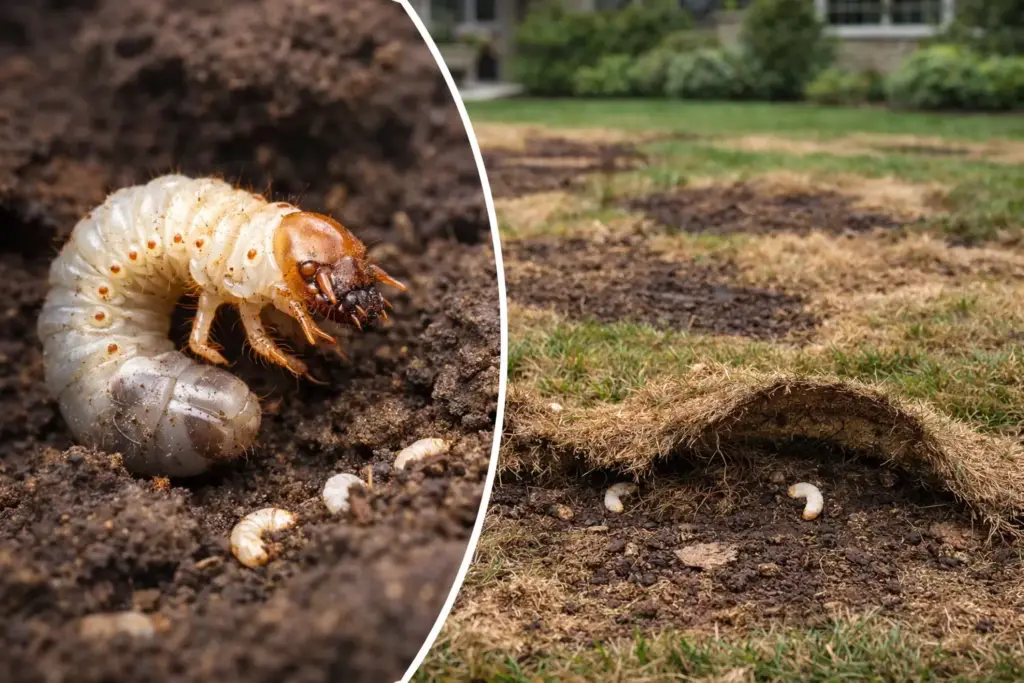
European chafer beetles have emerged as a significant turfgrass pest across northern regions of North America. Although adult beetles are rarely observed by homeowners, their larvae—commonly known as white grubs—can cause extensive damage to turfgrass systems. During periods of active feeding, larvae consume grass roots beneath the soil surface, often resulting in widespread lawn deterioration by late summer.
In regions experiencing repeated infestations, homeowners and landscape managers are increasingly evaluating the long-term sustainability of natural turfgrass systems. As a result, some are exploring alternative landscape surfaces, including artificial turf installations.
What Is the European Chafer and Why Is It Damaging to Turfgrass?
The European chafer (Rhizotrogus majalis) is an invasive scarab beetle species that has become well established across the northeastern United States and parts of Canada. Its larval stage is responsible for most turfgrass damage.
White grub larvae feed on grass roots beneath the soil surface, reducing the plant’s ability to absorb water and nutrients. When larval populations exceed established economic thresholds, root systems may be severely compromised. Turfgrass subsequently loses anchorage to the soil, causing sections of lawn to detach easily.
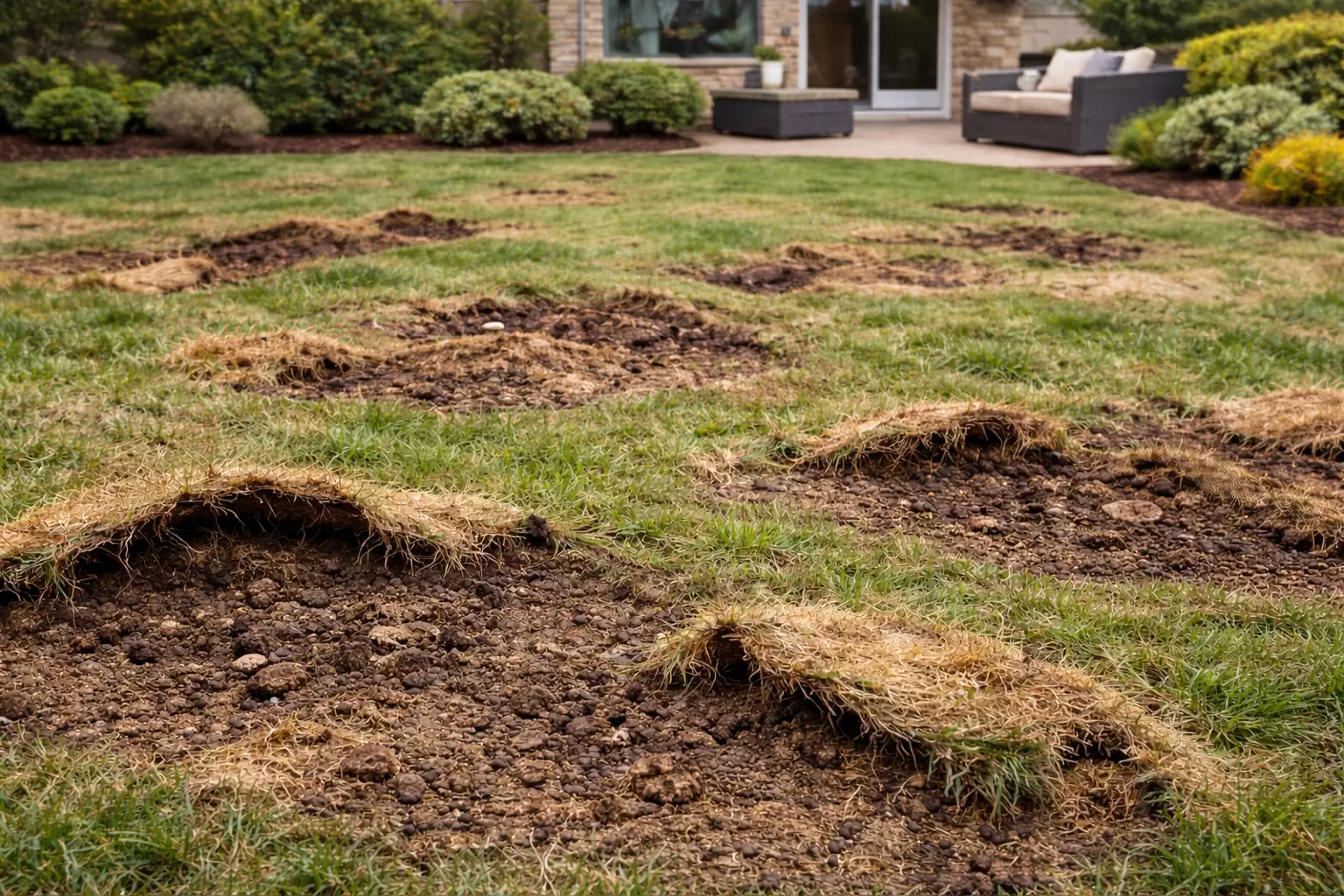
Research cited by Penn State Extension indicates that severe infestations can cause turf to be lifted or rolled back due to extensive root loss.
The Lifecycle That Leads to Turfgrass Decline
Damage associated with European chafer follows a predictable seasonal pattern tied to the insect’s lifecycle:
- Adult beetles emerge and lay eggs during early summer.
- Eggs hatch into larvae that begin feeding on turfgrass roots.
- Root systems weaken progressively during mid- to late summer.
- Turfgrass may exhibit browning and thinning as root mass declines.
- Severely affected areas can detach from the soil surface.
- Wildlife such as raccoons and skunks may dig into lawns while searching for larvae.
According to the University of Kentucky Turfgrass Program, heavily infested turf areas may be lifted easily because root systems have been destroyed. This type of damage reflects structural degradation rather than superficial discoloration.
Why European Chafer Infestations Often Reoccur
Even after reseeding or sod replacement, European chafer populations may return in subsequent seasons. Several environmental and management factors can influence susceptibility to recurring infestations, including:
- Shallow or poorly developed turf root systems
- Excessive irrigation that creates favorable soil conditions for larvae
- High nitrogen fertilization rates that encourage rapid, shallow growth
- Compacted soils that limit root depth
- Mild winter conditions that increase larval survival rates
The Cornell University Turfgrass Program emphasizes the importance of monitoring and threshold-based pest management strategies. Not all lawns require annual treatment, but unmanaged populations can increase the likelihood of repeated turf failure.
Economic and Environmental Implications of Severe Infestations
When European chafer populations reach damaging levels, homeowners may face repeated lawn renovation cycles. These may involve:
- Sod replacement or reseeding costs
- Increased irrigation to support turf recovery
- Wildlife disturbance from animals feeding on grubs
- Repeated applications of insecticides or biological control agents
The USDA Natural Resources Conservation Service emphasizes that living plant roots are essential for maintaining soil structure and biological activity. When root systems are destroyed by pests such as white grubs, soil stability can decline and turf resilience may be reduced.
Over time, repeated repair cycles can increase both financial costs and landscape maintenance inputs.
Artificial Turf as an Alternative in High-Infestation Areas
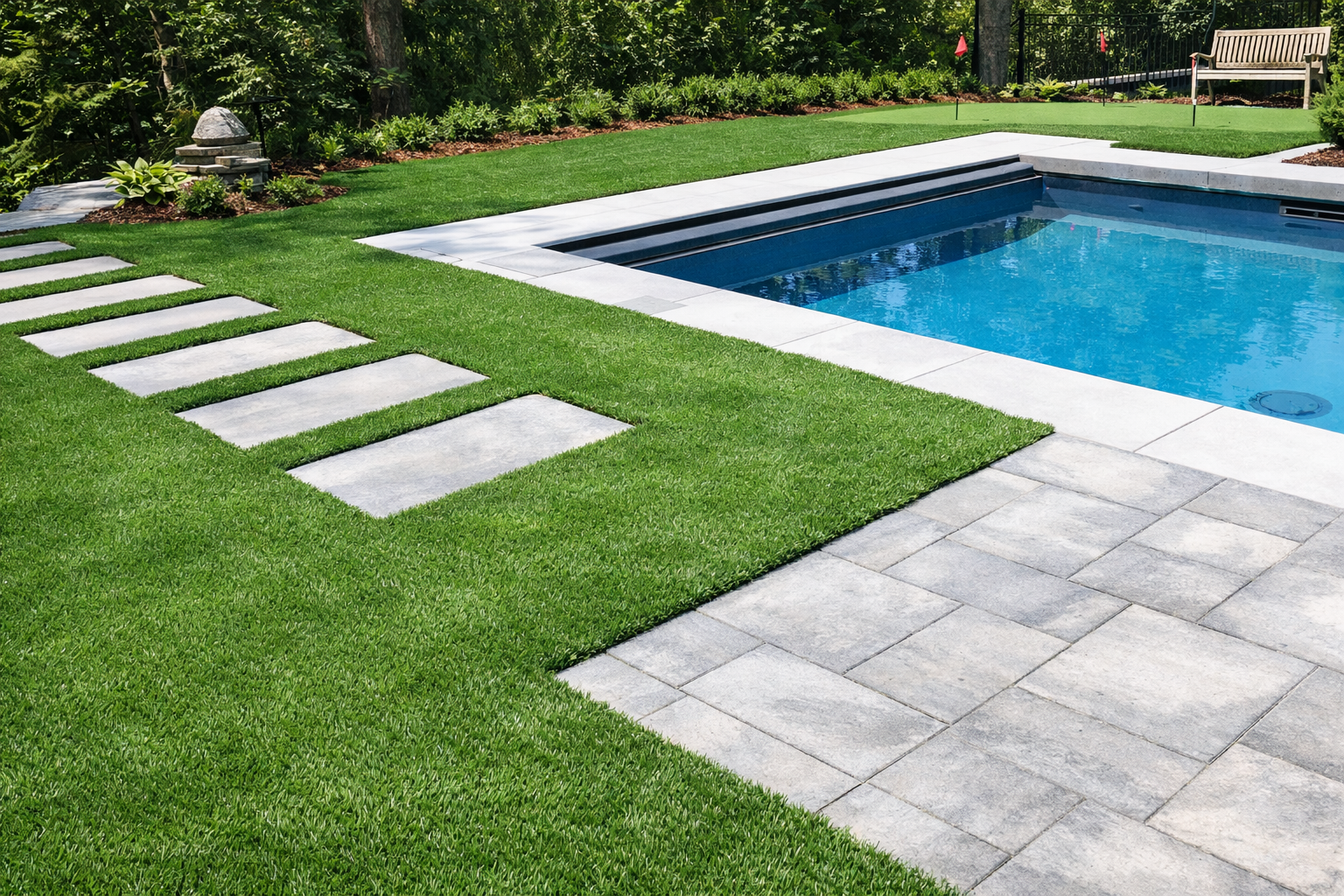
In regions with persistent European chafer pressure, some homeowners have begun evaluating artificial turf as an alternative ground cover.
Unlike natural grass systems, synthetic turf does not contain living root structures. As a result:
- White grub larvae cannot feed on the surface
- Turf cannot detach from soil due to root destruction
- Wildlife attraction related to grub feeding is reduced
- Insecticide treatments targeting turf pests become unnecessary
For landscapes that experience recurring pest-related turf failure, artificial turf may provide a stable and predictable surface option.
Importantly, this shift does not necessarily reflect a rejection of natural grass systems. Rather, it often represents a response to repeated structural damage associated with chronic grub infestations.
Landscape Considerations When Evaluating Artificial Turf
Homeowners evaluating landscape alternatives in chafer-prone regions frequently prioritize solutions that address long-term maintenance challenges. Desired characteristics may include:
- Reduced repair and replacement costs
- Lower irrigation requirements
- Decreased reliance on chemical pest management
- Resistance to wildlife disturbance
Modern artificial turf systems typically incorporate engineered base layers, drainage infrastructure, and durable synthetic fibers designed to maintain consistent surface performance.
By eliminating the biological root system required by white grub larvae, synthetic turf removes the primary food source that supports European chafer populations within lawn areas.
When Artificial Turf Becomes a Practical Landscape Option
Research from multiple university turf programs indicates that extensive white grub feeding can significantly weaken turfgrass systems, particularly under environmental stress conditions such as drought or heat.
Artificial turf may be considered a practical landscape alternative when:
- Multiple lawn renovation attempts have failed
- Wildlife digging damage occurs annually
- Water restrictions limit turf recovery
- Long-term pesticide use becomes undesirable
In areas with persistent European chafer pressure, the increasing adoption of artificial turf reflects a combination of economic, environmental, and maintenance considerations rather than purely aesthetic preferences.
Conclusion
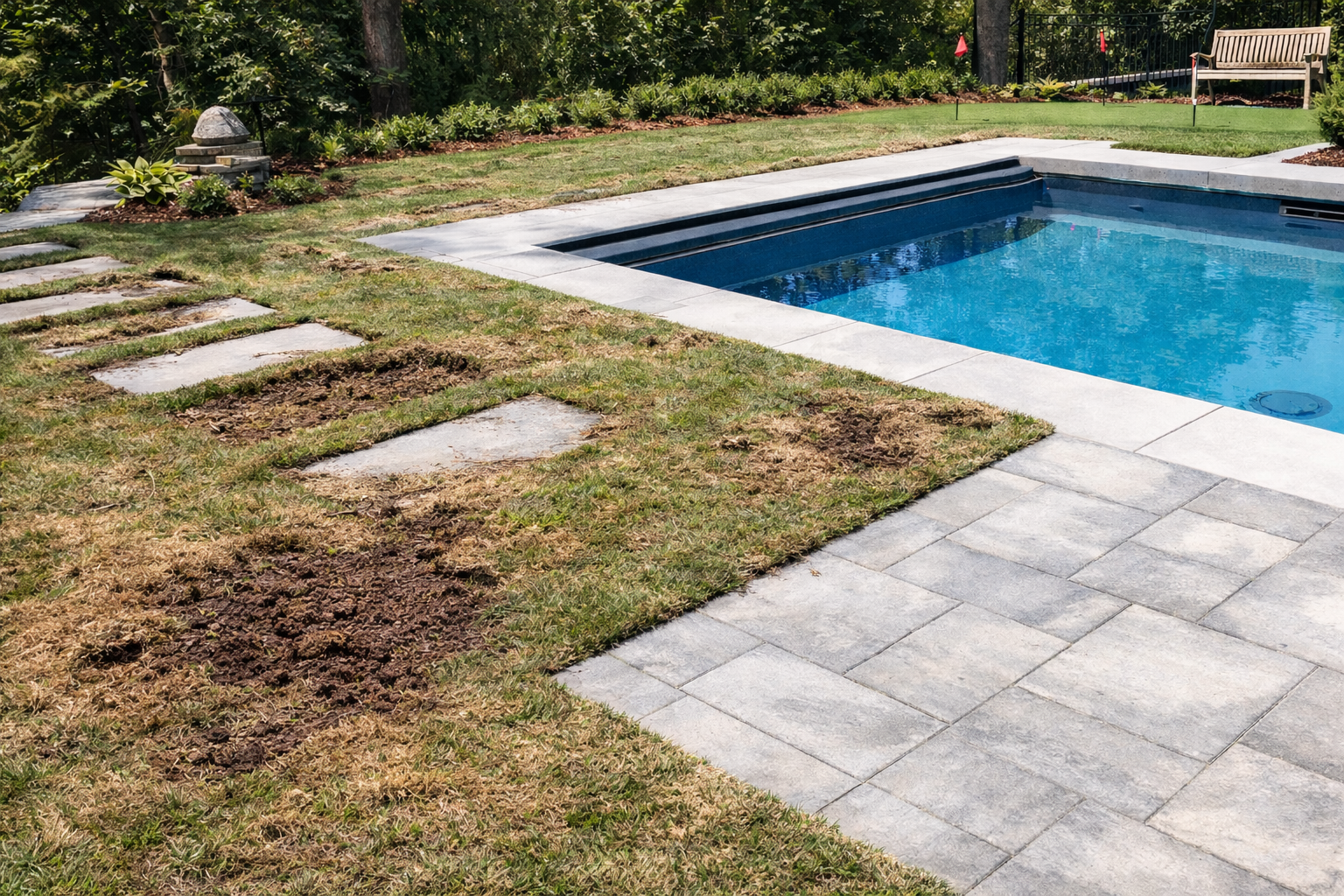
European chafer beetle infestations represent a root-level turfgrass problem capable of causing widespread lawn failure. By destroying the underground root structure, white grub feeding weakens soil stability, increases water requirements, and often leads to repeated lawn renovation.
For many homeowners, improved turf management practices remain the preferred approach to maintaining natural lawns. However, in regions experiencing chronic infestations, artificial turf can offer a landscape surface that avoids the biological vulnerabilities associated with turfgrass root systems.
Understanding the lifecycle and impact of European chafer beetles allows homeowners and landscape professionals to make informed decisions regarding whether to restore natural turf or transition to alternative landscape solutions.