

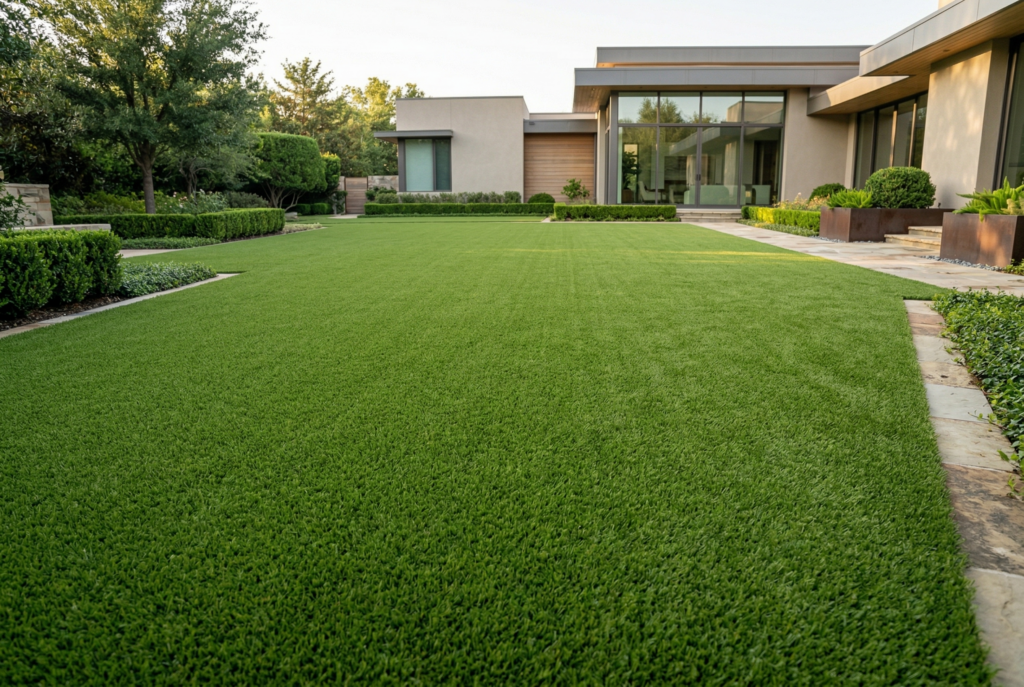
Artificial turf is often marketed as a simple, low-maintenance solution. However, many of the issues homeowners face are not due to defective turf but to poor buying decisions at the start. Choosing the wrong product, overlooking installation requirements, or prioritizing price over performance can lead to premature wear, heat issues, drainage failures, and dissatisfaction.

This guide explains the most common artificial turf buying mistakes, why they happen, and how to avoid them so your investment performs as intended.
The Most Common Artificial Turf Buying Mistakes
1. Buying Based on Price Alone
One of the most frequent mistakes is selecting turf purely because it is cheaper. Lower-cost turf often uses inferior fibers, lower density, and minimal UV protection.
What happens:
Cheaper turf may look acceptable at installation, but tends to flatten quickly, fade faster, and wear unevenly under normal use.
Key takeaway:
You are not just buying turf, you are buying durability, structure, and long-term performance.
2. Ignoring Turf Specifications
Many homeowners do not understand what turf specifications mean. Terms like blade height, face weight, and density directly impact performance.
What happens:
- Low face weight → thinner surface, faster wear
- Incorrect blade height → unnatural appearance or poor function
- Low density → turf struggles to stand upright
Key takeaway:
Specifications are not marketing terms; they are performance indicators.
3. Not Matching Turf to Its Intended Use
Different applications require different turf systems. A putting green, a pet area, and a front lawn each have different requirements.
What happens:
- Using landscape turf for pets → odor and drainage issues
- Using soft turf in high-traffic areas → premature matting
- Using the wrong turf in hot zones → excessive surface heat
Key takeaway:
There is no “one-size-fits-all” turf solution.
4. Overlooking Drainage and Base Requirements
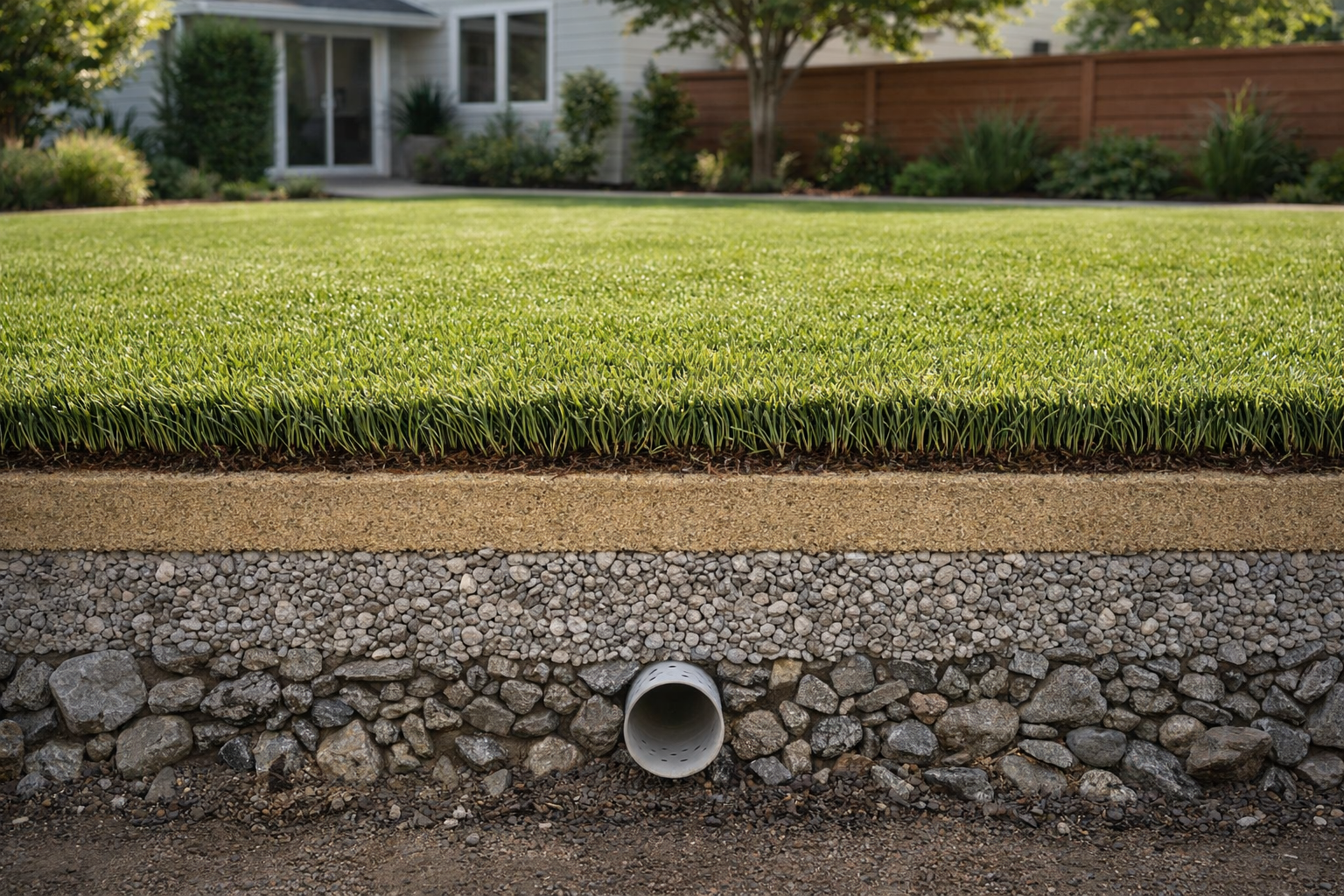
A major mistake is assuming turf alone determines performance. The system beneath the turf is just as important.
What happens:
- Water pooling
- Odor buildup
- Surface instability
Key takeaway:
Turf does not fail; systems fail when the foundation is ignored.
5. Not Considering Heat and Environmental Conditions
Artificial turf can get much hotter than natural grass, especially in direct sun or reflective environments.
What happens:
- Surface temperatures exceeding safe levels
- Fiber expansion leading to faster wear in high-traffic paths
- Discomfort for pets and homeowners
Studies from Brigham Young University have shown that synthetic turf surfaces can exceed 150°F (65°C) under direct sunlight.
Key takeaway:
Environment matters. Turf must be selected with heat and exposure in mind.
6. Choosing an Inexperienced Contractor
Even the best turf will underperform if installed incorrectly.
What happens:
- Uneven surfaces
- Seam separation
- Poor drainage
- Reduced lifespan
Key takeaway:
Installation is not a secondary step, it is part of the product.
Real-World Insight (From 15 Years of Field Experience)
A common scenario involves homeowners selecting budget turf for a high-traffic backyard. Within 12 to 18 months, visible wear paths appear, especially in walkways and pet zones.
The turf is often blamed. However, in nearly every case:
- The turf density was too low for the application
- No traffic management or pathway planning was considered
- Heat exposure accelerated fiber fatigue
This is not a product defect. It is a mismatch between product selection and real-world use.

How to Avoid These Mistakes
To ensure long-term performance, homeowners should focus on the following:
- Choose turf based on use case, not just appearance
- Understand key specifications such as face weight and density
- Ensure proper base preparation and drainage design
- Account for heat exposure and environmental conditions
- Work with experienced, qualified installers
- Invest in quality materials designed for your specific application
Final Thoughts
Artificial turf is a highly engineered product designed to perform under specific conditions. When those conditions are respected, it delivers excellent long-term results. When they are ignored, problems arise and are often misinterpreted as turf defects.
By understanding how to avoid common buying mistakes, homeowners can make informed decisions, protect their investment, and ensure their turf performs exactly as expected.