

Separating Science from Fear When It Comes to Synthetic Grass Temperatures
Artificial turf heat is one of the most debated topics in landscaping. Some claim synthetic grass becomes dangerously hot, melts in sunlight, or raises yard temperatures dramatically.
The reality is more nuanced and well documented in research.
Artificial turf does absorb solar radiation. However, surface temperature is influenced by environmental exposure, surrounding materials, airflow, and installation conditions. Multiple university and government studies show that heat behavior is situational, not inherent product failure.
Below, we separate common myths from research-supported facts.
Myth #1: Artificial Turf Is Always Much Hotter Than Natural Grass
What research shows:
Studies from Penn State’s Center for Sports Surface Research have documented that artificial turf can reach higher surface temperatures than natural grass under direct sunlight, particularly on hot, windless days.
However, the same studies show:
- Natural grass cools through evapotranspiration
- Dry or drought-stressed grass can also heat significantly
- Surface temperature does not equal ambient air temperature
The key variable is moisture and airflow.
Surface readings taken at fiber level can exceed air temperature, but temperatures drop rapidly when shaded or cooled with water.
Myth #2: Artificial Turf Gets as Hot as Asphalt (or Hotter Than Everything Else)
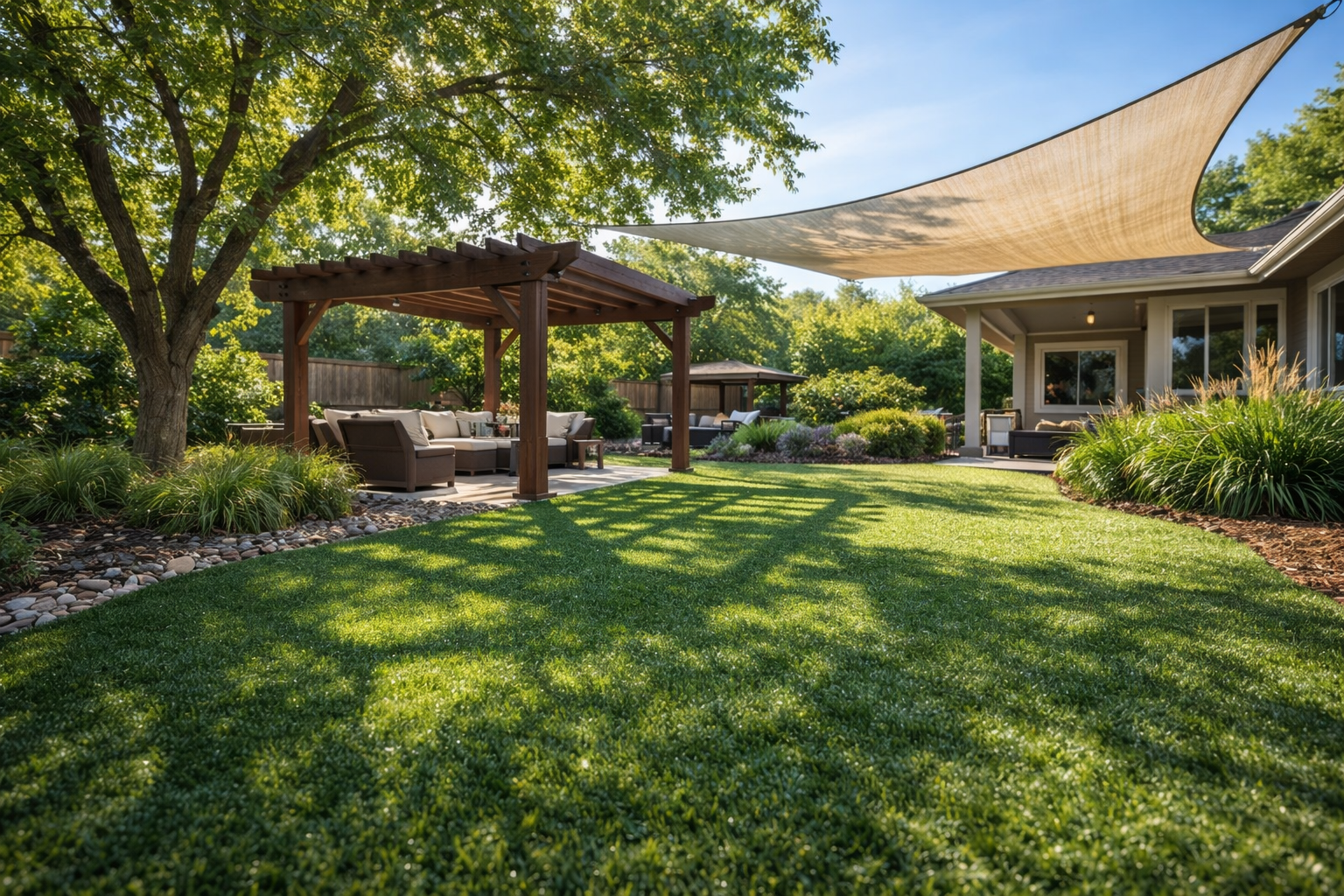
Reality: Artificial turf can get very hot in direct sunlight. That is expected under high solar exposure, not a product defect.
According to the New York State Department of Health: Crumb-Rubber Infilled Synthetic Turf Athletic Fields surface temperatures on synthetic turf fields have been recorded significantly higher than air temperature during peak sun.
Examples cited by NYSDOH include:
- BYU (June 2002): Average synthetic turf surface temperature 117°F, compared to 78°F on natural grass and 110°F on asphalt. A maximum of 200°F was reported.
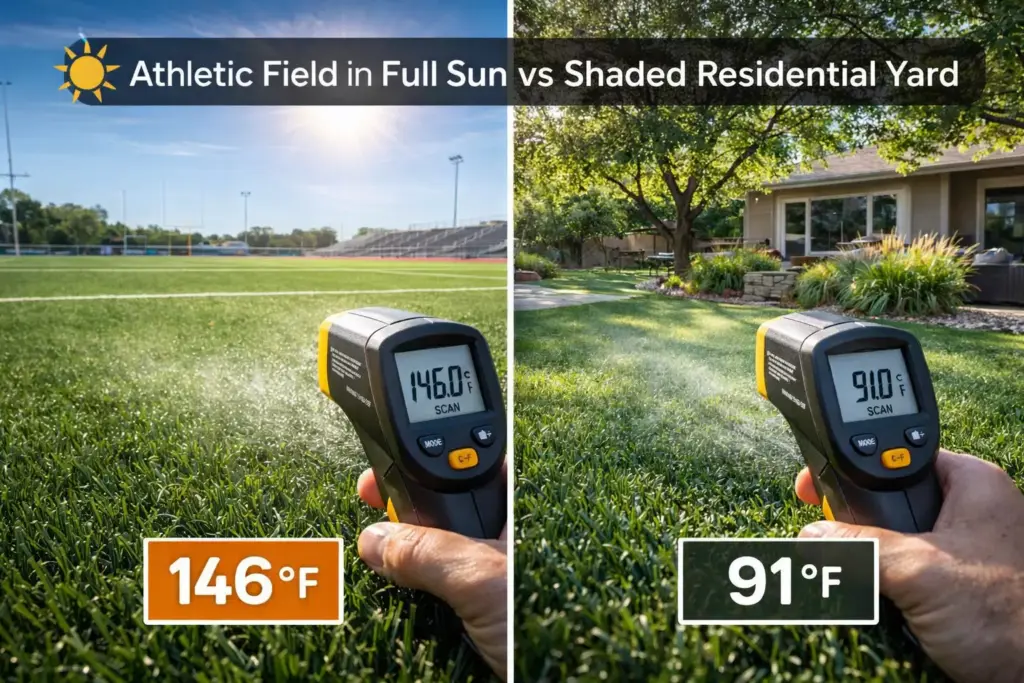
- Penn State study: With air temperatures between 79°F and 85°F, synthetic turf surfaces measured between 120°F and 146°F.
These readings occurred under full sun, dark fiber systems, and athletic field conditions.
What This Means for Homeowners
Heat is driven by:
- Direct sun exposure
- Dark surface color
- Limited airflow
- Surrounding concrete or masonry
Large athletic fields in full sun behave differently than landscaped residential yards with shade, airflow, and varied materials.
NYSDOH also notes that surface temperatures drop quickly with cloud cover, and watering can temporarily reduce surface heat, though the cooling effect may not last long in direct sun.
Artificial turf can reach uncomfortable surface temperatures in extreme sun. So can concrete, pavers, playground equipment, and decking.
Heat is a site condition. Smart planning, shade integration, and layout design determine how comfortable a yard feels during peak summer hours.
This is physics, not failure.
Myth #3: Artificial Turf Melts in Normal Sunlight
Standard sunlight does not melt artificial turf.
Modern turf fibers are manufactured from UV-stabilized polyethylene and polypropylene. These materials are tested under accelerated UV aging standards.
According to the Synthetic Turf Council, melting incidents are typically caused by reflected or concentrated solar energy, especially from low-emissivity (Low-E) windows.
Low-E glass reflection has been documented by:
- The International Window Film Association
- Multiple state energy offices
Concentrated reflection can damage vinyl siding, car paint, and plastic furniture as well. This is a reflection physics issue, not a turf defect.
Myth #4: Artificial Turf Is Unsafe for Kids and Pets Due to Heat
The U.S. Consumer Product Safety Commission (CPSC) has conducted evaluations of synthetic turf surfaces.
While surface temperatures can rise in peak sun, the CPSC does not classify residential artificial turf as inherently unsafe due to heat.
Important context:
- Playground equipment, slides, rubber mats, and metal surfaces also reach elevated temperatures.
- Surface temperature varies by time of day and shading.
- Water reduces turf temperature quickly through evaporative cooling.
Usability depends on environmental exposure, not simply material type. As an overall guideline, CPSC staff recommends young children wash their hands after playing outside, especially before eating.
Myth #5: Artificial Turf Raises Overall Yard Temperature
Large-scale urban heat island effects are associated with concrete, asphalt, and dark roofing materials.
According to the U.S. Environmental Protection Agency (EPA) Urban Heat Island research:
Heat island effects are driven primarily by:
- Extensive impervious surfaces
- Lack of tree canopy
- Dense urban development
A residential artificial turf installation does not meaningfully alter regional air temperature.
Air temperature at standing height is determined by atmospheric conditions, not turf selection alone.
What Research Shows Actually Influences Turf Heat
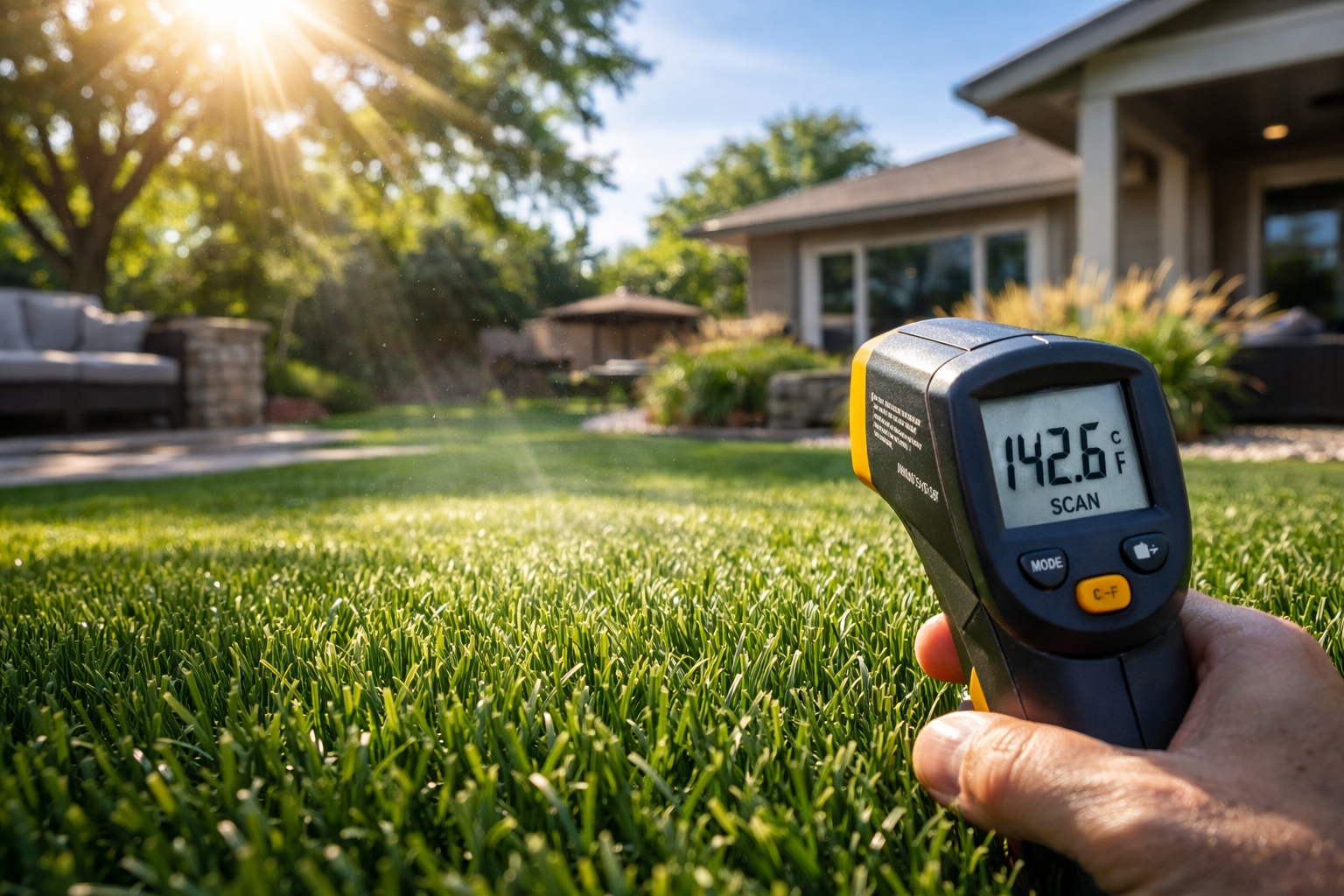
Surface temperature is determined by:
1. Solar Radiation Intensity
Peak afternoon sun increases surface readings.
2. Wind Speed
Airflow accelerates cooling.
3. Infill Type
Research shows certain infill materials retain less heat than black crumb rubber.
4. Shade Coverage
Tree canopy dramatically lowers surface temperature.
5. Surrounding Materials
Concrete and masonry reflect and radiate heat toward adjacent surfaces.
These variables explain why turf below a reflective window may behave differently than turf under partial tree cover.
Important Context: Athletic Fields vs Residential Lawns
Many heat concerns originate from large athletic field studies using crumb rubber infill.
Residential installations differ:
- Smaller surface area
- Mixed landscaping
- Partial shade
- Lower continuous exposure
Comparing a 100,000-square-foot stadium field to a backyard landscape is not equivalent.
Practical Heat Mitigation Strategies
Research and field testing support the following strategies:
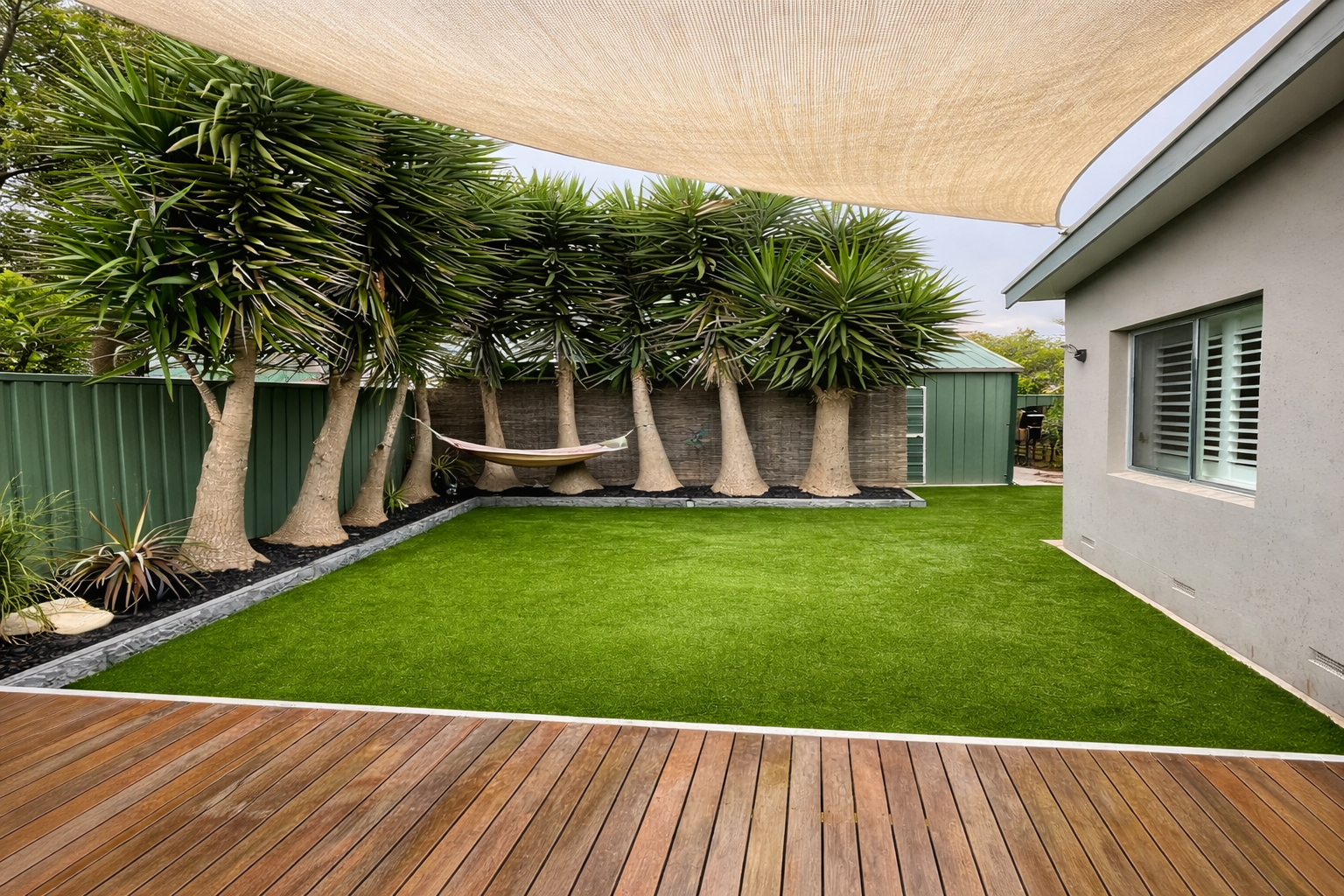
- Install shade trees or pergolas
- Avoid reflective glass exposure
- Use alternative infill materials when appropriate
- Allow airflow around perimeter walls
- Rinse surface lightly during peak heat
Water cooling can reduce surface temperature rapidly due to evaporative effect, as documented in Penn State and BYU testing.
Final Perspective
Artificial turf does absorb solar heat. That is expected for any outdoor surface exposed to direct sun.
However, peer-reviewed university research and federal agency evaluations show:
- Heat levels depend on environment
- Melting requires concentrated reflection
- Turf does not inherently raise neighborhood temperatures
- Proper design significantly moderates heat performance
Artificial turf heat is a planning variable, not a product failure.
Understanding environmental physics allows homeowners to make informed decisions based on research rather than headlines.