

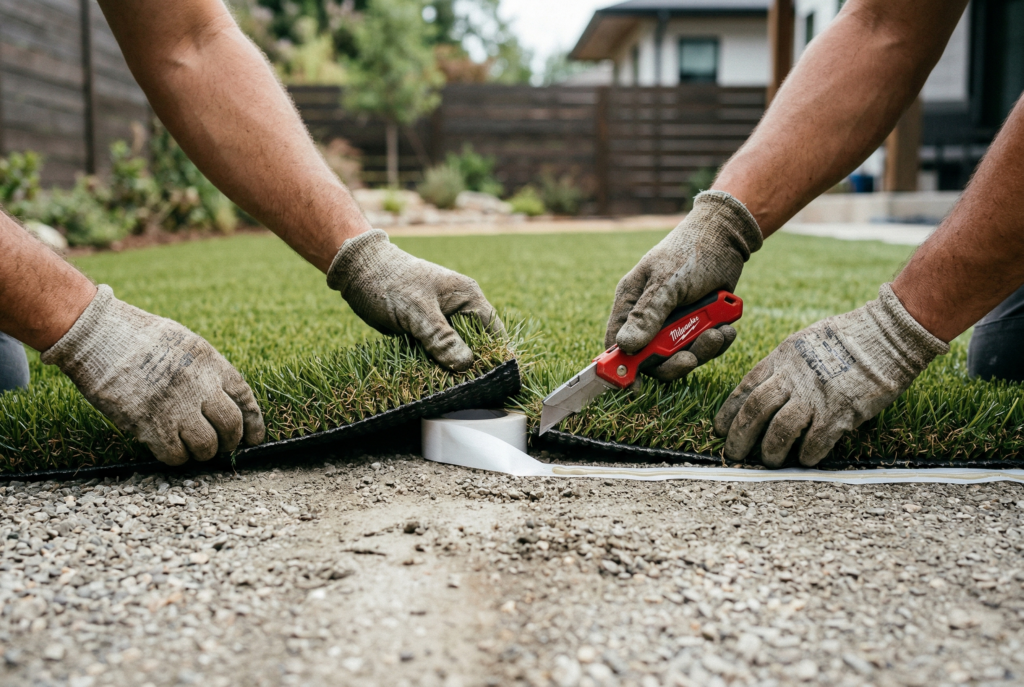
How Proper Site Preparation, Base Construction, and Installation Protocol Determine Long-Term Turf Success
Artificial turf systems are engineered to provide durable, low-maintenance landscapes for many years. However, the long-term performance of any turf installation is determined far more by the installation process than by the turf product itself.
In the majority of cases where homeowners experience issues such as uneven surfaces, premature wear, drainage problems, or shifting turf, the root cause can be traced back to improper site preparation, incorrect base construction, or installation shortcuts.
Artificial turf is a system—not simply a surface. Every layer beneath the turf plays a critical role in how the finished lawn performs.
Artificial Turf Is Only One Part of the System
Many homeowners assume that the turf product itself determines quality. While fiber quality and backing construction are important, the foundation beneath the turf is what ultimately supports the system.
A properly installed artificial turf system typically includes:
- Site excavation and preparation
- A properly compacted aggregate base
- Grading for drainage
- Edge restraint or framing
- Seaming and anchoring of the turf
- Correct infill installation
If any of these components are improperly executed, the turf surface above may experience issues over time—even if the turf itself is manufactured correctly.
The Importance of Proper Site Preparation
The installation process begins with evaluating the existing site conditions.
Professional installers assess factors such as:
- Soil type
- Natural drainage patterns
- Slope and grading
- Sun exposure and heat reflection
- Expected foot traffic
- Environmental conditions surrounding the yard
Each of these elements influences how the turf system must be constructed.
For example, heavy clay soils may require additional drainage planning, while enclosed yards with limited airflow may require heat management considerations.
Skipping this evaluation can lead to preventable long-term problems.
Base Construction: The Foundation of Turf Performance
The most important structural component of any artificial turf installation is the base layer.
The base serves several critical functions:
- Stabilizes the turf surface
- Supports foot traffic and daily use
- Allows water to drain properly
- Prevents shifting or uneven areas
Typically, the base is constructed using layers of crushed aggregate that are compacted to create a stable but permeable foundation.
If the base is too shallow, poorly compacted, or constructed with the wrong materials, the turf above may develop:
- dips or depressions
- soft spots
- drainage issues
- uneven ball roll (for putting greens)
These issues are structural in nature and originate from the base—not the turf fibers.
Why Proper Drainage Planning Matters
Artificial turf is designed to allow water to pass through the backing and into the base below. However, the base must also be designed to move that water away from the installation.
A well-designed drainage system may include:
- proper grading and slope
- permeable base materials
- drainage channels or outlets
- perimeter drainage in certain environments
Without proper drainage design, water can accumulate beneath the turf, leading to surface pooling or soft areas.
Again, this is not a product failure. It is a design issue beneath the surface.
Seaming, Anchoring, and Surface Finishing
Once the base is properly prepared, the turf itself must be installed with precision.
Professional installers carefully handle several critical details:
Seam Construction
Large turf installations require seams where sections of turf are joined together. Poor seam work can result in visible lines, separation over time, or inconsistent surface appearance.
Anchoring and Edge Restraints
Turf must be secured properly around the perimeter to prevent movement. Edge restraints help maintain the shape and stability of the installation over time.
Infill Distribution
Infill serves several essential functions:
- supports turf fibers
- stabilizes the surface
- helps regulate temperature
- adds weight and durability to the system
Without proper infill installation, turf fibers may lay flat or wear prematurely.
Environmental Factors That Must Be Considered
An experienced installer also evaluates environmental conditions that may affect turf performance.
Examples include:
- reflective windows that concentrate heat
- enclosed yards that trap hot air
- heavy traffic pathways
- pet activity areas
- drainage flow from surrounding landscaping
Proper planning allows installers to adjust the system design to accommodate these factors before installation begins.
Real-World Experience from the Field
In many situations where turf issues arise, the turf product itself is functioning exactly as designed.
For example, we have evaluated installations where surface depressions appeared after a year of use. In each case, the cause was a base layer that had not been compacted correctly during installation.
Once sections of the turf were lifted and the base properly reconstructed, the surface performed normally.
This highlights an important point: artificial turf systems succeed or fail based largely on installation quality.
How Homeowners Can Protect Their Investment
Homeowners can ensure long-term performance by working with experienced professionals who follow proper installation protocols.
Key factors to look for include:
- thorough site evaluation before installation
- proper excavation and base preparation
- appropriate drainage planning
- experienced seam construction
- correct infill installation
- consideration of environmental conditions
A well-installed turf system should perform reliably for many years with minimal maintenance.
Conclusion
Artificial turf is an engineered landscape system designed to perform under a wide range of conditions. However, the success of that system depends heavily on professional installation.
When issues occur, they are almost always related to installation methods, environmental factors, or usage patterns—not defects in the turf product itself.
Proper site evaluation, base construction, and installation protocol ensure that artificial turf performs exactly as intended for years to come.