

Environmental Risk Assessment Before Professional Turf Installation
Artificial turf installations function as engineered landscape systems. While modern synthetic turf products are manufactured to withstand environmental stressors, long-term performance depends heavily on the surrounding site conditions.
Many of the issues contractors encounter after installation—such as localized heat concentration, drainage limitations, surface deformation, or premature wear—are rarely caused by turf manufacturing defects. Instead, they typically originate from environmental conditions that were not fully evaluated during the planning phase.
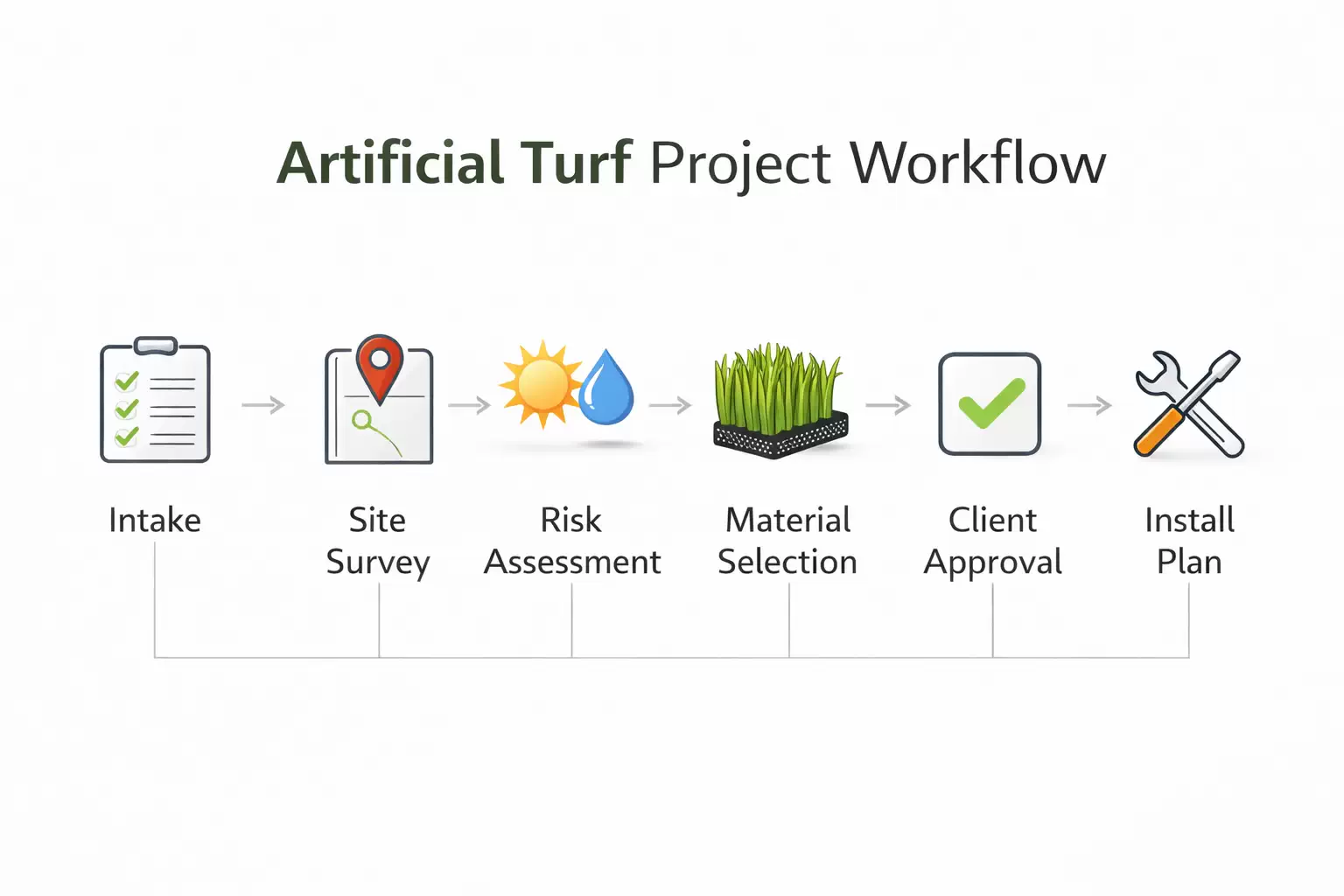
A systematic site evaluation allows contractors to identify environmental variables before installation begins. By understanding how solar exposure, drainage behavior, soil structure, and surrounding architecture influence turf systems, installers can design landscapes that remain stable and functional for many years.
Why Site Evaluation Is Critical for Artificial Turf Systems
Unlike natural grass, artificial turf systems do not regenerate through biological growth. Their performance depends on several engineered structural layers working together to support the surface.
Typical artificial turf systems include:
- Compacted subgrade soil
- Aggregate base layers
- Drainage pathways
- Perforated turf backing
- Infill materials that stabilize turf fibers
If environmental variables such as water movement, reflected heat, or soil instability are not considered during planning, these structural layers can be compromised.
Research from Pennsylvania State University’s Center for Sports Surface Research has examined the environmental behavior and performance characteristics of synthetic turf systems used in both athletic and landscape settings. Their work emphasizes how surface materials interact with climate conditions such as sunlight, airflow, and surrounding infrastructure.
Reference
Penn State Center for Sports Surface Research
https://plantscience.psu.edu/research/centers/turf/research/center-for-sports-surface-research
Understanding these environmental interactions helps contractors design installations that align with site conditions rather than working against them.
Solar Exposure and Heat Reflection
Solar radiation is one of the most influential environmental variables affecting outdoor landscape materials.
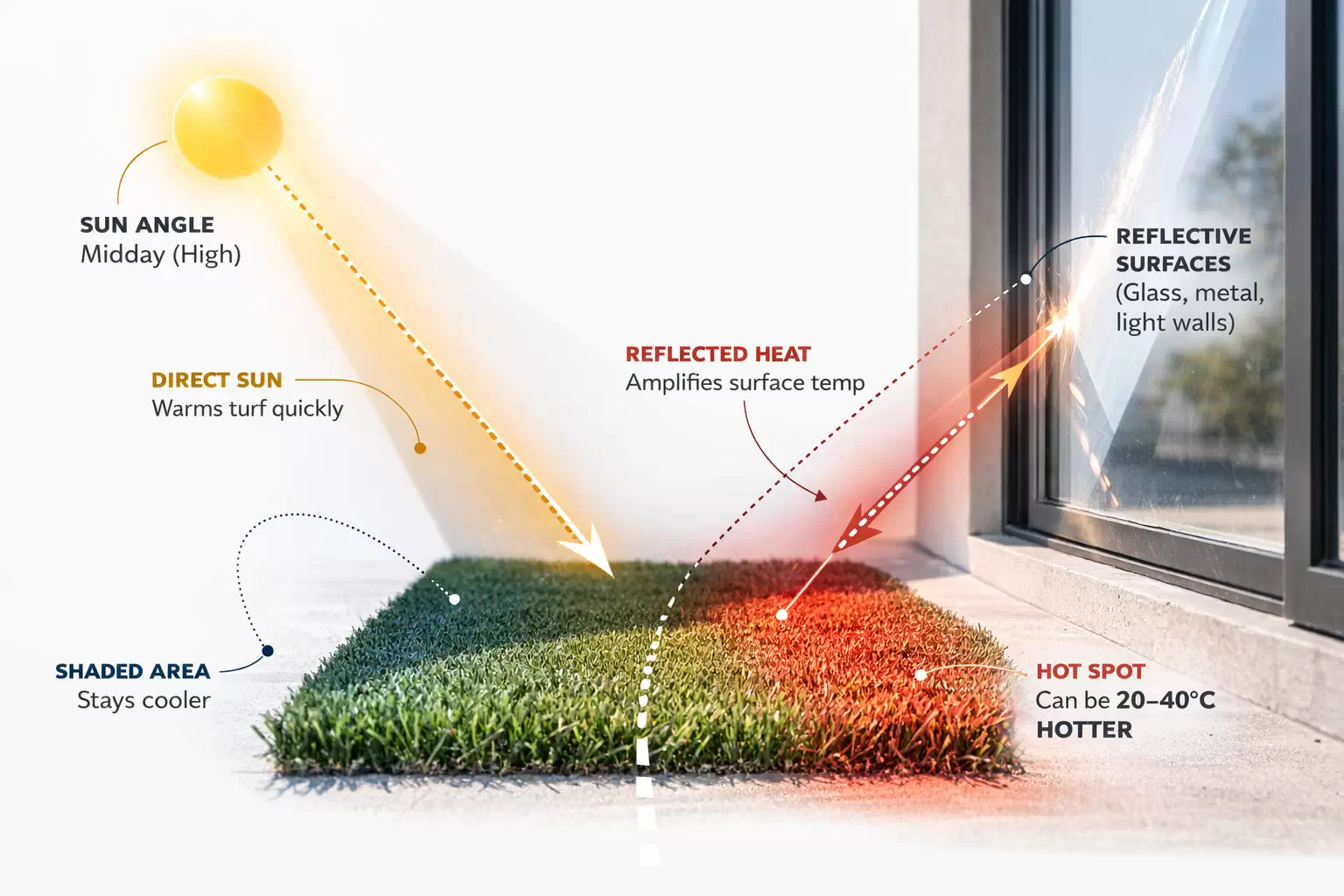
Artificial turf—like pavers, decking, asphalt, or concrete—absorbs solar energy during direct sunlight exposure. However, extreme localized heating is typically associated with reflected or concentrated solar radiation, not ambient air temperature alone.
Reflective Architectural Surfaces
Modern construction frequently incorporates materials capable of reflecting solar radiation, including:
- Low-emissivity (Low-E) glass windows
- Stainless steel or aluminum railings
- Metal siding and flashing
- Vinyl siding
- Light-colored masonry or stone surfaces
Low-E windows are designed to reflect infrared radiation in order to improve building energy efficiency. Under certain angles of sunlight, however, these windows can reflect concentrated solar energy toward nearby surfaces.
Research from Lawrence Berkeley National Laboratory’s Windows and Daylighting Group has examined the energy performance of modern glazing technologies and the way reflective window systems influence solar heat gain.
Reference
Lawrence Berkeley National Laboratory – Window Technologies Research
https://windows.lbl.gov/
Identifying reflective structures during the site inspection phase helps contractors prevent potential heat concentration zones that may affect nearby surfaces.
Mitigation Strategies
When reflective structures are present, contractors may consider:
- Installing shade structures such as pergolas or shade sails
- Applying anti-reflective window films
- Adjusting turf placement away from concentrated reflection paths
- Using turf fibers with higher heat tolerance in exposed zones
Early planning reduces the likelihood of localized heat stress and supports the long-term durability of the installation.
Drainage Design and Water Movement
Effective drainage is essential to the longevity and stability of artificial turf systems.
Unlike natural grass, artificial turf does not absorb water through root systems. Instead, water moves through perforations in the turf backing and drains through the aggregate base layer beneath the surface.
If water cannot move efficiently through the base system, problems may develop including:
- Surface pooling
- Base erosion
- Infill displacement
- Stress along seam lines
Research and construction guidance from the United States Golf Association (USGA) emphasize the importance of engineered base systems and subsurface drainage for synthetic turf installations.
Reference
USGA Turfgrass and Environmental Research
https://www.usga.org/course-care/turfgrass-and-environmental-research.html
Proper drainage planning protects the structural layers that support the turf surface.
Evaluating Existing Soil Conditions
Before installation begins, contractors should evaluate the physical properties of the existing soil.
Important factors include:
- Soil composition (clay, loam, or sandy soils)
- Current soil compaction levels
- Natural slope and water flow direction
- Low areas where water naturally accumulates
Clay-dominant soils often require deeper aggregate bases or additional drainage considerations.
The USDA Natural Resources Conservation Service (NRCS) provides extensive research explaining how soil structure, root systems, and microbial activity influence water movement and soil stability.
Reference
USDA Natural Resources Conservation Service – Soil Health
https://www.nrcs.usda.gov/conservation-basics/natural-resource-concerns/soil/soil-health
Understanding soil conditions allows contractors to design base systems that maintain structural stability over time.
Microclimates and Enclosed Landscape Environments
Certain installations occur in environments where airflow is restricted and heat accumulation is more likely.
Examples include:
- Courtyards surrounded by walls
- Rooftop terraces
- Narrow side yards between buildings
- Landscapes adjacent to large masonry structures
These environments often experience different thermal conditions compared with open landscapes.
The U.S. Environmental Protection Agency’s Urban Heat Island research program explains how surrounding materials and restricted airflow influence localized surface temperatures in built environments.
Reference
U.S. Environmental Protection Agency – Heat Island Effect
https://www.epa.gov/heatislands
Recognizing microclimate conditions allows contractors to adjust turf system design, shading strategies, or material selection accordingly.
Traffic Patterns and Load Distribution
Artificial turf systems are designed to withstand regular foot traffic. However, concentrated use in specific areas can accelerate fiber fatigue and surface wear.
High-traffic zones often occur near:
- Entry gates
- Patio exits
- Pool decks
- Walkways between structures
- Pet access routes
Contractors can reduce long-term wear by designing landscapes that distribute foot traffic.
Potential solutions include:
- Installing stepping stones or paver pathways
- Creating defined pedestrian routes
- Using reinforced turf systems in heavy-use areas
Planning traffic flow before installation helps preserve fiber integrity and extend the service life of the surface.
Wildlife and Pest Considerations
In many regions, wildlife damage to lawns occurs when animals search for soil-dwelling insects such as white grubs.
Animals including raccoons, skunks, and birds frequently dig into turf areas while searching for insect larvae.
Artificial turf eliminates the root systems that typically support grub populations. However, contractors should still consider surrounding landscape conditions that may influence wildlife activity.
Research from the University of Kentucky Department of Entomology provides guidance on white grub biology and turf damage patterns.
Proper base compaction and secure perimeter edging help maintain installation stability in areas where wildlife activity is common.
Material Selection and System Design
Artificial turf products vary widely in fiber composition, backing technology, and infill materials. Contractors should select turf systems appropriate for the intended landscape application.
Common installation uses include:
- Residential lawns
- Pet landscapes
- Playground surfaces
- High-traffic walkways
- Decorative landscape installations
Working with manufacturers that maintain consistent engineering standards and installation guidance improves long-term results.
PremiumGrassBlades develops turf systems designed to integrate with professional base preparation, drainage planning, and installation practices. Contractors who combine appropriate materials with careful site evaluation can deliver installations that perform reliably across diverse environmental conditions.
Documentation and Client Communication
Contractors can reduce post-installation misunderstandings by documenting environmental observations during the project planning phase.
Useful documentation may include:
- Site photographs
- Identification of reflective structures
- Soil condition notes
- Drainage observations
- Planned mitigation strategies
Clear communication about site conditions helps establish realistic expectations and demonstrates the importance of proper installation planning.
Conclusion
Artificial turf performance is strongly influenced by environmental conditions surrounding the installation site. Heat reflection, drainage limitations, soil structure, and concentrated traffic patterns are among the most significant factors affecting long-term durability.
Contractors who conduct thorough site evaluations can anticipate these variables and design turf systems that perform reliably for many years.
By combining environmental assessment, professional installation practices, and properly engineered turf systems, artificial turf installations can provide stable and long-lasting landscape solutions across residential and commercial environments.